
Most people think about indoor air quality only when they notice a problem. A persistent smell that does not go away. Allergy symptoms that seem worse at home than anywhere else. Dust is accumulating on surfaces faster than it should. By that point, the air quality issue has usually been present for weeks or months, quietly affecting health and comfort without visible evidence.
A well-configured HVAC system addresses these problems before they become noticeable, and in many cases before they become health issues. HVAC systems are the most powerful tool available for improving indoor air quality in residential and commercial buildings. But only when properly specified, configured, and maintained. This guide covers how the system works, which components matter most, and what building occupants need to do to sustain the results.
Why Indoor Air Quality Matters More Than Most People Realize
The EPA’s research on indoor air pollution produces a finding that consistently surprises people: indoor air is often significantly more polluted than outdoor air, sometimes by a factor of two to five times. This is not because outdoor air is clean. It is because modern buildings are designed to be airtight for energy efficiency, which concentrates pollutants that have no natural path to escape.
The combination of synthetic building materials, furniture off-gassing, cleaning product residues, cooking byproducts, and biological contaminants like mould spores and dust mites creates an indoor environment where pollutant concentrations build continuously without active intervention. Natural ventilation, the occasional open window, is insufficient in most climates for most of the year to address this accumulation effectively.
The health consequences range from short-term irritation to long-term respiratory sensitization. Headaches, fatigue, and eye irritation are common short-term responses to elevated VOC and particulate concentrations. Prolonged exposure to elevated mould spore counts, fine particulate matter, or specific chemical pollutants carries more serious implications, particularly for children, elderly occupants, and anyone with existing respiratory conditions. HVAC systems, when properly configured, represent the most comprehensive solution available.
How HVAC Systems Address Indoor Air Pollutants
Filtration: The Primary Removal Mechanism
Filtration is the mechanism most people associate with HVAC air quality improvement, and it is genuinely the most impactful single component when specified correctly. HVAC filters physically capture airborne particles as air circulates through the system: dust, pollen, pet dander, mould spores, and other particulate matter that would otherwise continue recirculating through the building.
Filter efficiency is measured by MERV rating, with higher numbers indicating finer filtration. A MERV 8 filter, standard in most residential installations, captures particles above ten microns effectively but allows smaller particles to pass through. A MERV 13 filter captures particles down to one micron, which includes the fine particulate matter and smaller allergens that cause the most respiratory impact. For occupants with allergies, asthma, or respiratory sensitivity, the difference between MERV 8 and MERV 13 filtration is clinically meaningful.
Ventilation: Dilution and Fresh Air Exchange
Filtration removes particles from recirculating air but does nothing to address the gaseous pollutants, VOCs, carbon dioxide, and combustion byproducts that accumulate in occupied spaces. Ventilation addresses these by diluting indoor pollutant concentrations with outdoor air and exhausting contaminated indoor air before it reaches problematic concentrations.
Heat recovery ventilators and energy recovery ventilators represent the most effective mechanical ventilation approach for air quality improvement without proportional energy cost. Both systems exchange stale indoor air with fresh outdoor air while recovering 70 to 85 percent of the thermal energy from the outgoing air stream. The result is continuous fresh air exchange at a fraction of the heating or cooling cost that simply opening windows would incur.
The ASHRAE 62.1 standard for ventilation rates in residential and commercial buildings represents the minimum fresh air exchange recommended for occupant health. Many existing buildings do not meet this standard, particularly those constructed before modern ventilation requirements were established. HVAC upgrades that include mechanical ventilation components specifically address this deficit.
Air Filtration Technology: Beyond the Basic Filter
HEPA Filtration and High-MERV Options
HEPA filtration, defined as capturing 99.97 percent of particles at 0.3 microns and above, represents the gold standard for particle removal. The challenge in standard residential HVAC applications is that true HEPA filters create airflow resistance that most existing system configurations cannot accommodate without modification. The options are either system modification by a qualified HVAC engineer or the use of standalone HEPA air purifiers in the rooms with the highest occupancy or pollutant concentration.
High-MERV filters in the 13 to 16 range provide a practical alternative within existing system configurations for most residential buildings. At MERV 13, filtration effectiveness approaches HEPA performance for the particle sizes that matter most for respiratory health without requiring system modification. This represents the most cost-effective filtration upgrade for most existing HVAC systems.
UV-C Germicidal Irradiation and Electronic Air Cleaners
UV-C germicidal lights installed within the HVAC air handling unit or ductwork address biological contaminants that mechanical filtration does not fully resolve. Mould growth on cooling coils, bacterial accumulation in drain pans, and airborne pathogens passing through the air handler are all addressed by UV-C irradiation. The technology is well-established in hospital and commercial building applications and increasingly available for residential installation.
Electronic air cleaners, including electrostatic precipitators and bipolar ionization systems, capture ultrafine particles that even high-MERV mechanical filters miss. The evidence base for these technologies varies significantly across product categories. Electrostatic precipitators with documented independent testing show genuine performance in ultrafine particle capture. Some ionization products have generated ozone as a byproduct, which is itself an indoor air pollutant. Evaluating independent performance data rather than manufacturer specifications is essential when considering electronic air cleaning additions.
Humidity Control: The Underestimated Air Quality Variable
The Optimal Humidity Range and Why It Matters
The EPA recommends maintaining indoor relative humidity between 30 and 50 percent for optimal air quality. This range is not arbitrary. Below 30 percent, respiratory membranes dry out, increasing susceptibility to airborne viruses and reducing the mucociliary clearance that removes inhaled particles from the airways. Airborne virus transmission increases measurably at low humidity. Above 50 percent, conditions favor mould growth, dust mite proliferation, and bacterial development in building materials and HVAC components.
Humidity management is an air quality intervention that many building occupants overlook entirely because its effects are less visible than dust accumulation or filter condition. Chronically elevated indoor humidity is one of the most common contributing factors to persistent respiratory symptoms in otherwise healthy occupants, and it is entirely addressable through HVAC configuration.
Dehumidification and Humidification Through HVAC
Whole-home dehumidification integrated with the HVAC system provides continuous, whole-building humidity management at consistent levels that portable dehumidifiers cannot replicate. A portable unit manages one room intermittently. A whole-home system maintains target relative humidity throughout the building continuously, responding to occupancy, outdoor conditions, and activity-generated moisture in real time.
In dry climates and during winter heating seasons, the inverse problem requires whole-home humidification. Forced-air heating systems reduce indoor relative humidity significantly during cold-weather operation. Integrating a whole-home humidifier with the HVAC system maintains humidity within the optimal range year-round, addressing the respiratory dryness, increased virus transmission risk, and comfort issues that low-humidity heating seasons produce.
Ductwork: The Hidden Variable in Indoor Air Quality
Duct Condition and Contamination
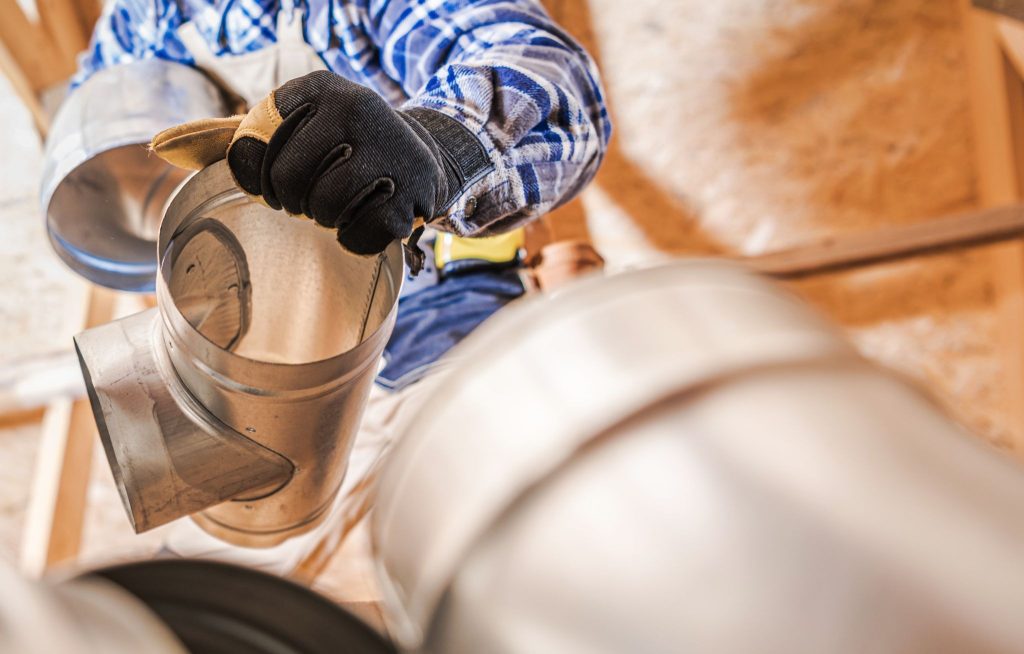
The air quality benefits that filtration and ventilation provide can be significantly undermined by ductwork in poor condition. Duct leakage allows unconditioned air from attics, crawlspaces, and wall cavities to bypass the filtration system entirely and enter the distribution stream. This air has never been processed by the HVAC filter. It carries whatever contaminants are present in the building cavities it passes through, including insulation fibers, construction debris, mould spores from moisture-affected materials, and pest activity residues.
In a typical residential building with unaddressed duct leakage, 20 to 30 percent of the air distributed through the duct system may have bypassed filtration entirely. This makes filter upgrades significantly less effective than they would be in a properly sealed system.
Duct Sealing, Cleaning, and Design
Professional duct sealing using mastic sealant or metal-backed tape addresses leakage points that allow contaminant bypass. The air quality improvement is immediate and measurable in buildings with significant prior leakage. The energy efficiency improvement typically produces utility bill reductions that partially offset the sealing cost.
The EPA’s guidance on duct cleaning is more cautious than the marketing for duct cleaning services typically reflects. Duct cleaning is genuinely beneficial when there is visible mould growth inside ducts, when ducts are infested or were infested with rodents or insects, or when ducts are clogged with excessive dust. In the absence of these specific conditions, routine duct cleaning produces limited demonstrable air quality benefit in most residential systems. The condition driving the decision matters more than the schedule.
Smart Controls and Monitoring for Air Quality Management
Indoor air quality monitors that measure CO2, VOC concentration, particulate matter, humidity, and temperature provide the real-time feedback that transforms HVAC management from schedule-based to condition-responsive. Without monitoring, HVAC systems operate on programmed schedules that bear no relationship to actual indoor air quality at any given moment. With monitoring integrated into smart HVAC controls, ventilation rates, filtration cycling, and humidity management adjust in response to measured conditions.
Demand-controlled ventilation systems use CO2 concentration as a proxy for occupancy, increasing fresh air intake when CO2 rises above target thresholds and reducing it when the space is unoccupied. The result is both better air quality management and reduced energy consumption compared to fixed ventilation schedules. In commercial buildings, this technology has demonstrated energy savings of 20 to 40 percent on ventilation costs while maintaining or improving measured air quality outcomes.
Conclusion
HVAC systems improve indoor air quality through filtration, ventilation, humidity control, and the ductwork infrastructure that delivers conditioned air throughout a building. Each mechanism addresses a different category of indoor pollutant, and the most effective air quality outcomes come from addressing all of them together rather than optimizing any single component in isolation.
The performance ceiling of any HVAC air quality system is determined by maintenance. Properly specified, well-maintained HVAC systems with appropriate filtration grades, mechanical ventilation, humidity management, and sealed ductwork produce indoor environments that are measurably healthier than buildings without these elements.